
Emergency Pest Control
Bee Swarm on Your Property? Who to Call in Florida
By Jobe Pest Services LLC · Published October 9, 2026 · Updated November 3, 2026
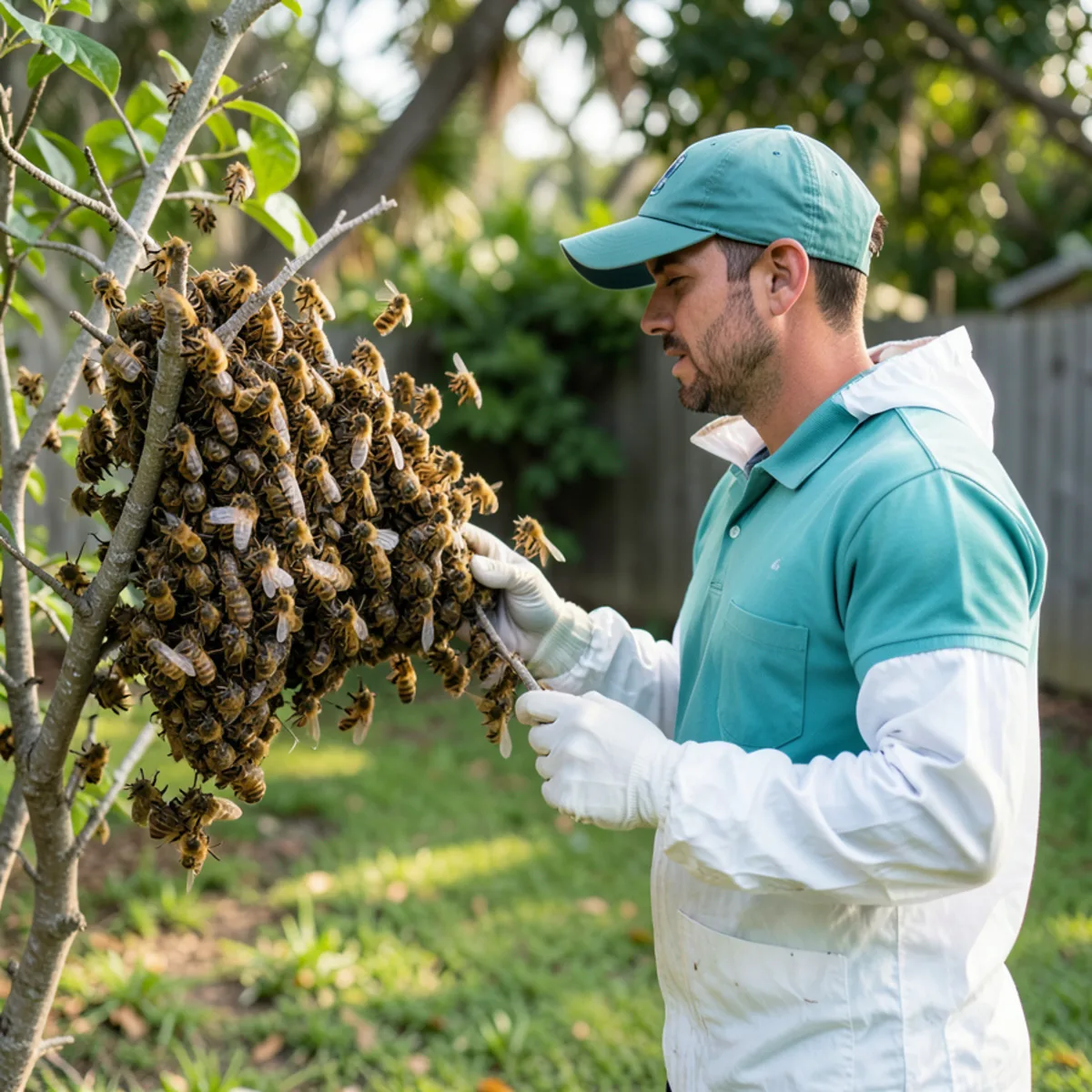
A cluster of bees the size of a football hanging from a tree branch looks alarming, but a resting swarm is usually calm and often moves on within a day or two as the colony searches for a permanent home. The real problem is a hive that moves into a wall, soffit or shed — that will not leave on its own, and in Florida it may be a defensive Africanized colony.
Here is how to tell the difference and respond safely.
A resting swarm vs an established hive
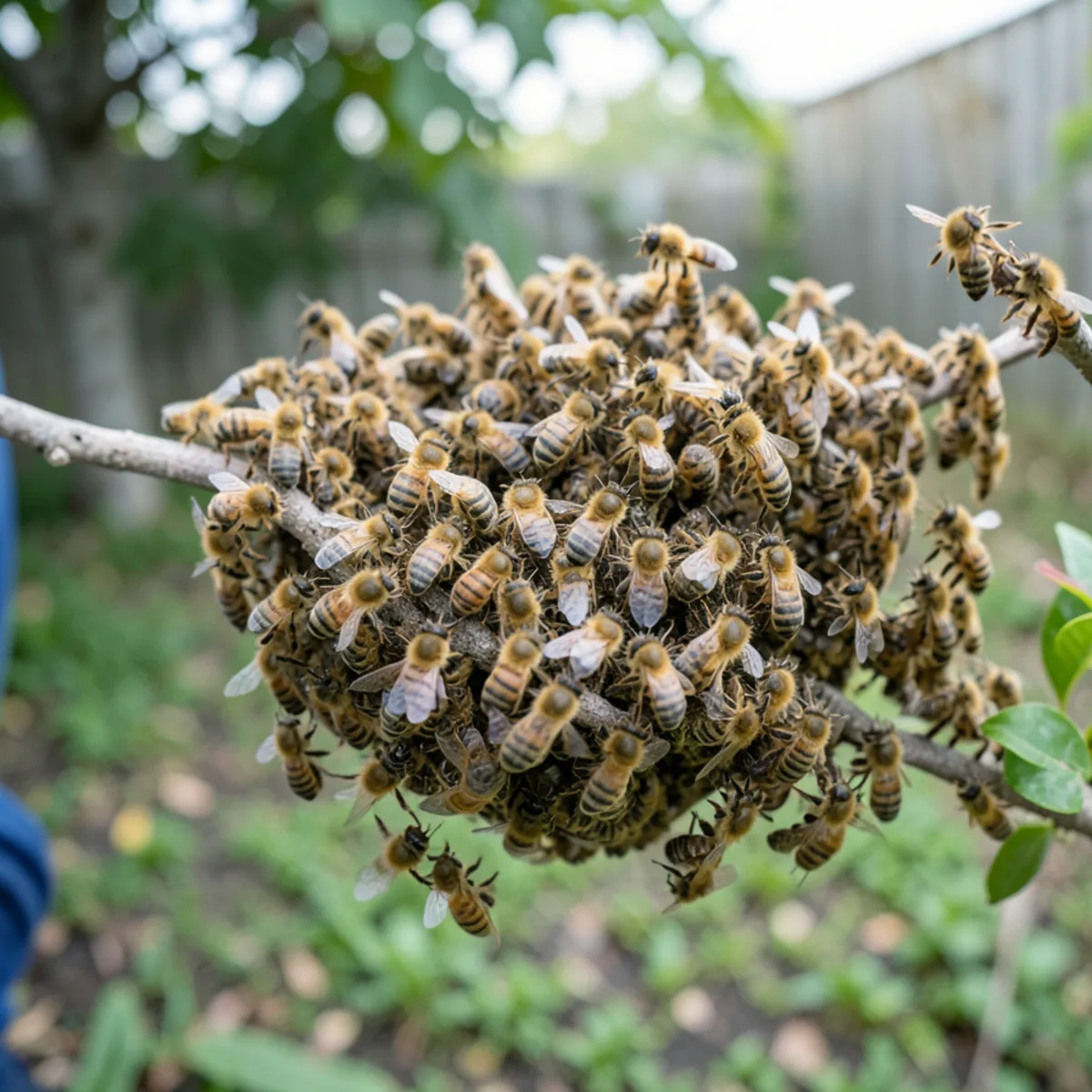
A swarm is bees on the move — a loose cluster around a queen, resting briefly on a branch, fence or wall before relocating. It carries no honeycomb and is generally not defensive because it has no nest to protect. Keep people and pets away, do not spray it or throw anything at it, and in most cases it will leave on its own.
An established hive is different: bees coming and going from a fixed point in a wall, soffit, meter box or shed, often with comb and brood inside. That colony is there to stay and will defend itself, which is when it becomes a safety issue that needs professional handling.
Why Florida bees need extra caution
Florida has Africanized honey bees, which defend their colony far more aggressively than European honey bees and can respond in large numbers to a disturbance. That is why a hive near a doorway, in a wall or anywhere people pass should never be disturbed, sprayed by a homeowner, or sealed up without being dealt with first.
For a live, relocatable swarm or an accessible hive, a beekeeper can often relocate the bees, and we refer to one where that fits. Where a colony is inside a structure and poses a safety risk, call us for the safe response — do not try to handle a defensive Florida colony yourself.
Why bees swarm at all
Swarming is not an attack; it is how a healthy honey bee colony reproduces. When a hive grows crowded, usually in spring, the old queen leaves with about half the workers to find a new home, while the original hive raises a fresh queen. The departing cluster is what you see draped on a branch or fence.
That cluster is in a travelling, house-hunting state — scout bees fan out looking for a cavity, and the group moves on once they agree on one. Understanding that a swarm is passing through, not moving in, is why the usual advice is to leave it room to continue on its way.
Who to call, and when
The right call depends on where the bees are and what they are doing. A calm cluster resting in the open, reachable without risk, is often a job for a local beekeeper, who can collect the living bees and give them a managed home — the outcome worth aiming for whenever it is practical.
The picture changes once bees have moved into a structure, when a cluster sits somewhere that puts people at risk, or when there is any sign of a defensive response. At that point a pest professional experienced with Florida colonies is the safer first call, and we will point you to a beekeeper instead whenever live relocation is the fit.
How a hive ends up in a wall
A wall colony almost always starts with those scout bees. They probe the exterior of a house for a sheltered cavity with a small, defensible opening — a gap in the soffit, a weep hole, a meter box, a crack where utilities enter — and a wall void or chimney behind it offers exactly the dark, protected space they want.
Once the group accepts the spot, the bees move in within hours and begin drawing comb. What looked like a temporary cluster on Monday can be an established colony building inside the wall by the weekend, which is why bees lingering against the house deserve closer attention than a cluster out on a branch.
Signs a hive has settled in a structure
It is not always obvious that bees have moved into a building rather than passing by. These signs point to an established colony inside:
- A steady two-way stream of bees to one fixed opening
- Bees entering a soffit, weep hole, meter box or vent
- A low hum audible through the wall on a quiet day
- Warmth or a faint sweet smell at that spot indoors
- Brown or waxy staining bleeding through drywall or trim
- Activity continuing in the same place for more than a few days
Why you cannot just seal it or wait
The tempting shortcuts both backfire. Closing the entrance traps the colony inside, where the bees often chew through to the interior looking for a way out, so you end up with bees in the living space instead of outside it. Spraying a structural colony rarely reaches the whole nest and can provoke exactly the defensive reaction you want to avoid.
Leaving it is no better over time. An abandoned or killed colony leaves behind comb and honey that, with no bees to tend it, can ferment, melt in the heat and seep through walls, drawing ants, roaches and rodents. Sound removal means getting the bees out and, where possible, clearing the comb — not patching over the problem.
Protecting people and pets
Until a colony is handled, distance is the real protection. Keep children and pets indoors or well away from the flight path, and avoid running mowers, trimmers or loud equipment near the nest — vibration and noise are classic triggers for a defensive Florida colony. Anyone with a known sting allergy should stay clear entirely and keep their emergency plan ready.
Because Africanized bees respond in greater numbers and pursue farther than people expect, the safe reaction to a stirred-up colony is to get indoors or into a vehicle quickly rather than to stand and swat. A pet tied or penned near a hive is especially vulnerable, since it cannot flee, and should be moved well before any work begins.
Bees or wasps? It changes the plan
Telling bees from wasps matters because the response differs. Honey bees are fuzzy, amber-and-brown and thickly built, gather in a dense cluster or a comb-filled cavity, and are worth saving through relocation where it can be done. The slim, smooth, brightly banded insects building an open papery comb are wasps, handled as a removal rather than a rescue.
If you are not sure which you have, that is a good moment to ask before acting, since the wrong assumption leads to the wrong — and sometimes riskier — response. A quick look by someone who works with both will confirm it and set the right course for your particular situation.
Related on this site
Sources
- UF/IFAS Extension — Africanized honey bees in Florida