
Spider Control
Common Florida House Spiders and Which Ones Matter
By Jobe Pest Services LLC · Published October 12, 2026 · Updated November 3, 2026
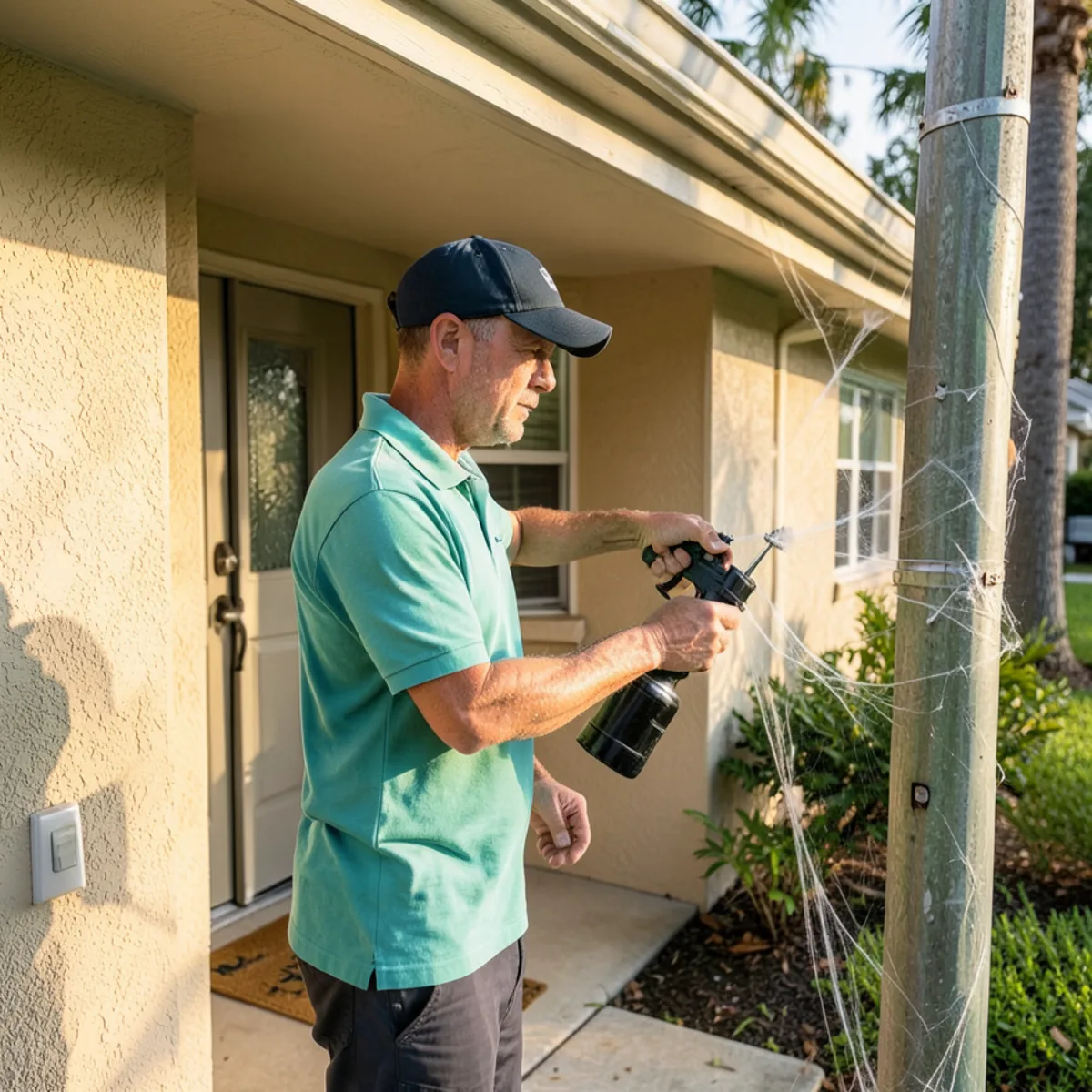
Most spiders you find around a Florida home are harmless nuisance spiders — they eat other insects and would rather flee than bite. Only two in this area, the southern black widow and the brown widow, warrant real caution. Knowing which is which takes the fear out of a spider sighting and tells you when to call.
Here is a plain guide to the spiders you are most likely to see in and around Wimauma homes.
The harmless ones you’ll see most
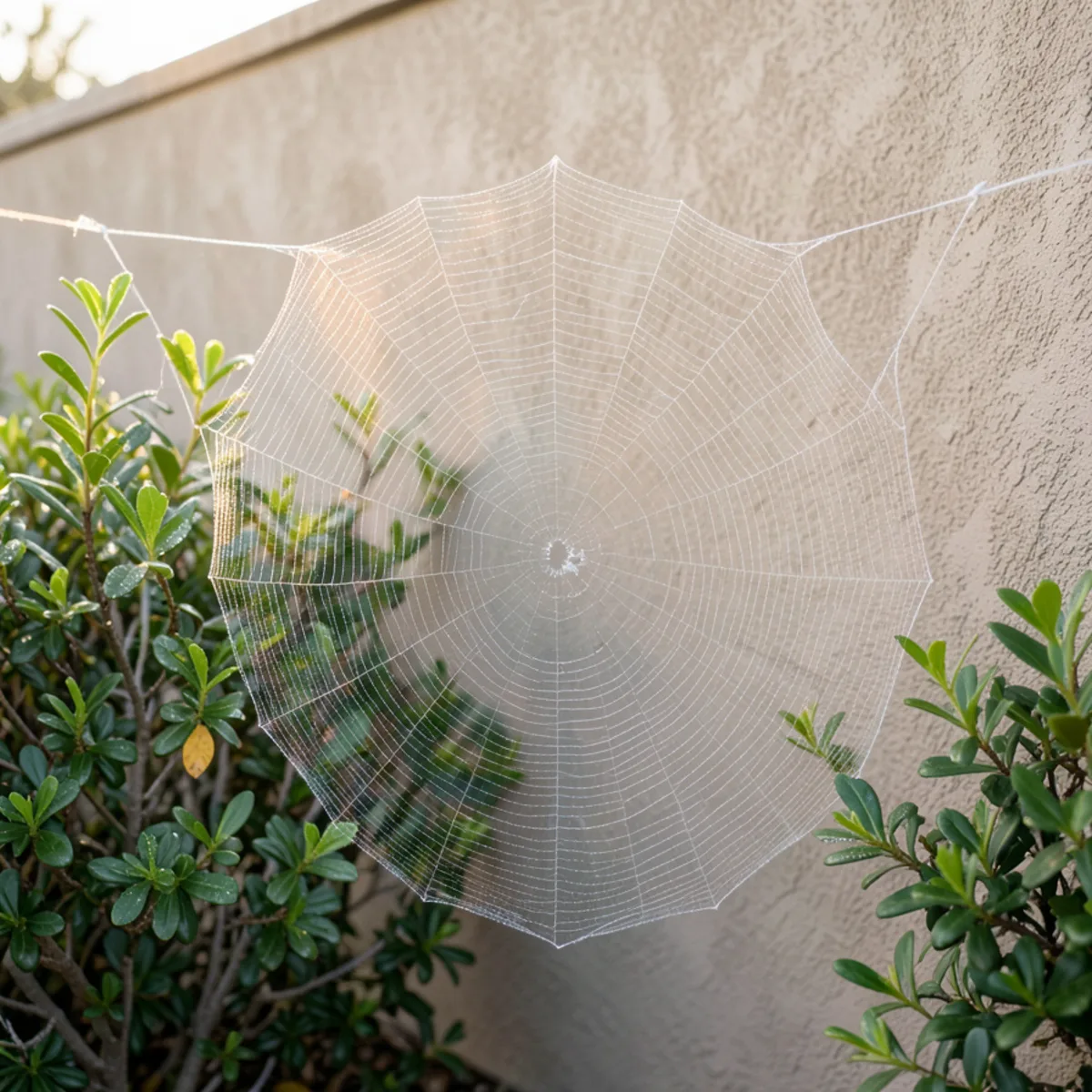
Wolf spiders are large, hairy and fast, hunting across floors and patios rather than building webs — alarming to find but not medically significant. Orb weavers spin the big round webs on eaves and between shrubs overnight and are harmless. Jumping spiders are the small, bold ones that watch you and hop; they are beneficial predators. Cellar spiders ("daddy long-legs") hang in loose webs in garages and corners and pose no threat.
All of these are a sign of one thing: a food supply of insects around the house. Reducing that food with a perimeter treatment, and clearing webs, is what keeps their numbers down.
The two that deserve caution
The southern black widow is glossy black with a red hourglass underneath, nesting low in sheds, garages, meter boxes and stacked materials. The brown widow is tan-to-brown with an orange hourglass and spiky egg sacs, favoring railings, furniture and lanai corners; it is now more common than the black widow in much of Florida. Both can deliver a medically significant bite, so keep clear and let a professional treat the harborage.
If you are reaching into a shed, meter box or stacked materials, wear gloves. If you find a widow or its egg sacs, don’t disturb it — that is a good time to call.
When treatment makes sense
A few spiders outdoors are normal and even helpful. Treatment makes sense when webs keep returning on eaves, lanais and entryways, when you’re seeing spiders indoors, or when you find a widow. The fix pairs de-webbing with a perimeter treatment that cuts the insects spiders feed on, so they come back far slower.
Why you see more spiders in fall
Spider sightings around Wimauma tend to spike as summer fades. Many species mature in late summer and early fall, so the males that spent the season hidden start wandering in search of mates, and that is when they turn up crossing a wall or a garage floor in plain view. The spiders were there all along; autumn simply sends them walking.
Cooler, drier nights nudge some of them toward the stable conditions indoors, while the insects they hunt gather at lit windows and doorways. A jump in sightings usually reflects this seasonal rhythm rather than a sudden infestation, which is worth remembering before you reach for a can.
Porch lights and the lanai
The single biggest driver of spiders on a Florida home is the buffet your exterior lighting creates. Porch fixtures, garage lights and bright bulbs by the door pull in moths, gnats and other night insects, and the spiders simply set up where the food is — spinning webs across the eave, the doorway and the screen of the lanai.
Switching exterior bulbs to warm-toned or yellow “bug” lights, aiming fixtures down rather than out, and turning off lights you are not using all thin the insect crowd. Fewer insects at the glass means fewer webs to sweep each morning, because the spiders follow their prey elsewhere.
The brown recluse question
Almost every Florida homeowner who finds a brown spider wonders if it is a brown recluse. In nearly all cases it is not: the recluse is not established as a resident Florida species, and the brown spiders people actually meet here are harmless hunters like wolf spiders, or the brown widow with its telltale orange hourglass and spiky egg sac.
Verified recluse encounters in the state are rare and usually trace to spiders carried in with boxes or belongings from elsewhere. If you find a brown spider, the realistic question is widow or harmless, not recluse — and an inspection can settle it rather than leaving you guessing from a phone photo.
Where spiders hide inside
Indoors, spiders gravitate to the quiet, low-traffic spots that mimic the sheltered outdoor cracks they favor. Garages and storage rooms lead the list, along with the backs of closets, the corners of the ceiling, window and door frames, and the undisturbed space behind furniture and stored boxes.
These are also the places egg sacs go unnoticed, which is how a few spiders quietly become many. Decluttering storage, sealing stored items in bins rather than open cardboard, and running a vacuum along ceiling corners and frames removes both the hiding spots and the webs and sacs tucked into them.
Making a home less inviting
You will never make a Florida yard spider-free, nor would you want to, but a handful of changes makes the house itself far less appealing:
- Swap white exterior bulbs for warm or yellow bug lights
- Sweep webs from eaves, corners and the lanai regularly
- Move woodpiles, mulch and debris away from the foundation
- Seal gaps around doors, windows, vents and utility lines
- Keep garages and storage decluttered and items in sealed bins
- Trim shrubs and branches back from the walls and roof
Reading an egg sac
Finding a spider is routine; finding egg sacs is the detail that changes the picture. A single sac can hold dozens to hundreds of eggs, so a quiet corner with several sacs is a population preparing to multiply rather than a lone visitor. Brown widow sacs are a useful warning sign in particular, being round with distinctive spiky projections.
Removing sacs as you find them — vacuuming them up and discarding the bag — interrupts the next generation before it hatches. When sacs keep reappearing in the same sheltered spots despite clearing them, that pattern points to harborage worth having a technician treat.
If a spider bites
Bites from the common Florida house spiders are rare and, when they happen, usually amount to a minor irritation that clears on its own, because these spiders are not inclined to bite and most cannot break skin meaningfully. Washing the area and applying a cool compress is generally all a nuisance-spider bite needs.
A widow bite is the exception and deserves medical attention, especially for children, older adults or anyone with health conditions — watch for spreading pain, cramping or sweating and seek care. If you can safely photograph the spider that helps identification, but never handle a suspected widow to get the picture.
Related on this site
Sources
- UF/IFAS Extension — spiders of Florida