
Emergency Pest Control
Wasp Nest by Your Front Door: What to Do Now
By Jobe Pest Services LLC · Published October 16, 2026 · Updated November 3, 2026
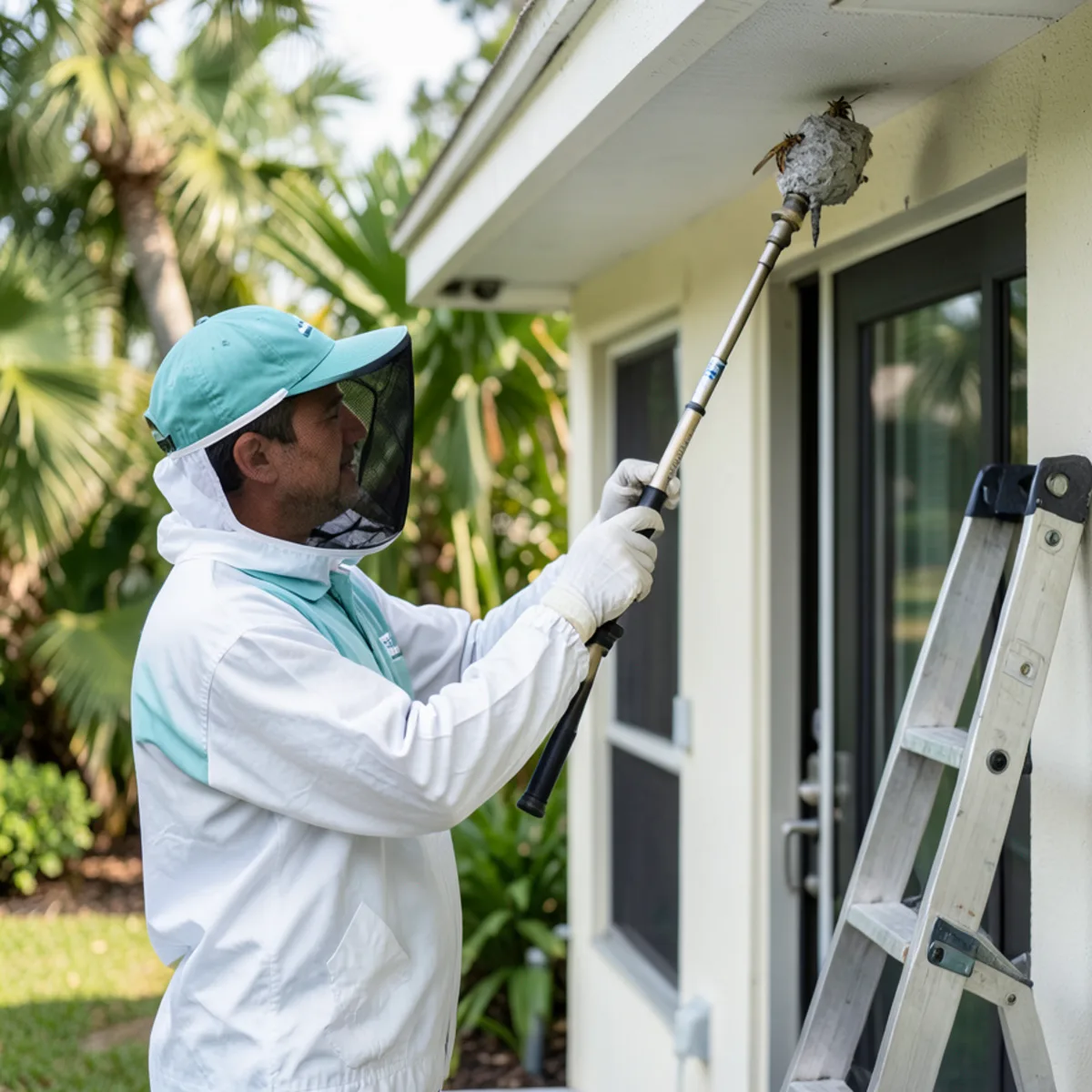
A wasp nest right by the front door is one of the most common urgent pest calls, and for good reason — it threatens everyone who uses the entrance. The instinct to knock it down is exactly the wrong move. Here’s a calm plan.
What to do now, what to avoid, and when to call for removal.
Keep people safe first
Use a different door until the nest is gone, and keep children and pets away from the area. Don’t swat at wasps coming and going — a single disturbed wasp can release an alarm signal that brings the colony to defend the nest. If anyone in the household has a stinging-insect allergy, treat it as an emergency and keep well clear.
Note where the wasps are entering and leaving; that tells the technician whether the nest is a visible paper nest, a mud dauber tube, or a hidden ground or wall-void nest.
What to avoid — and when to call
Don’t knock down a live nest, spray a store can at a large or elevated nest, or seal a wall-void nest — sealing a nest inside a wall traps the colony and can push them into the living space. Yellow jackets, which often nest in the ground or in walls, are especially risky to disturb.
Call for removal when the nest is by an entrance, is large or elevated, is a yellow jacket or hornet nest, or when anyone nearby is allergic. We remove paper wasp, yellow jacket, hornet and mud dauber nests safely, including ground and wall-void nests.
Know the nest before anything else
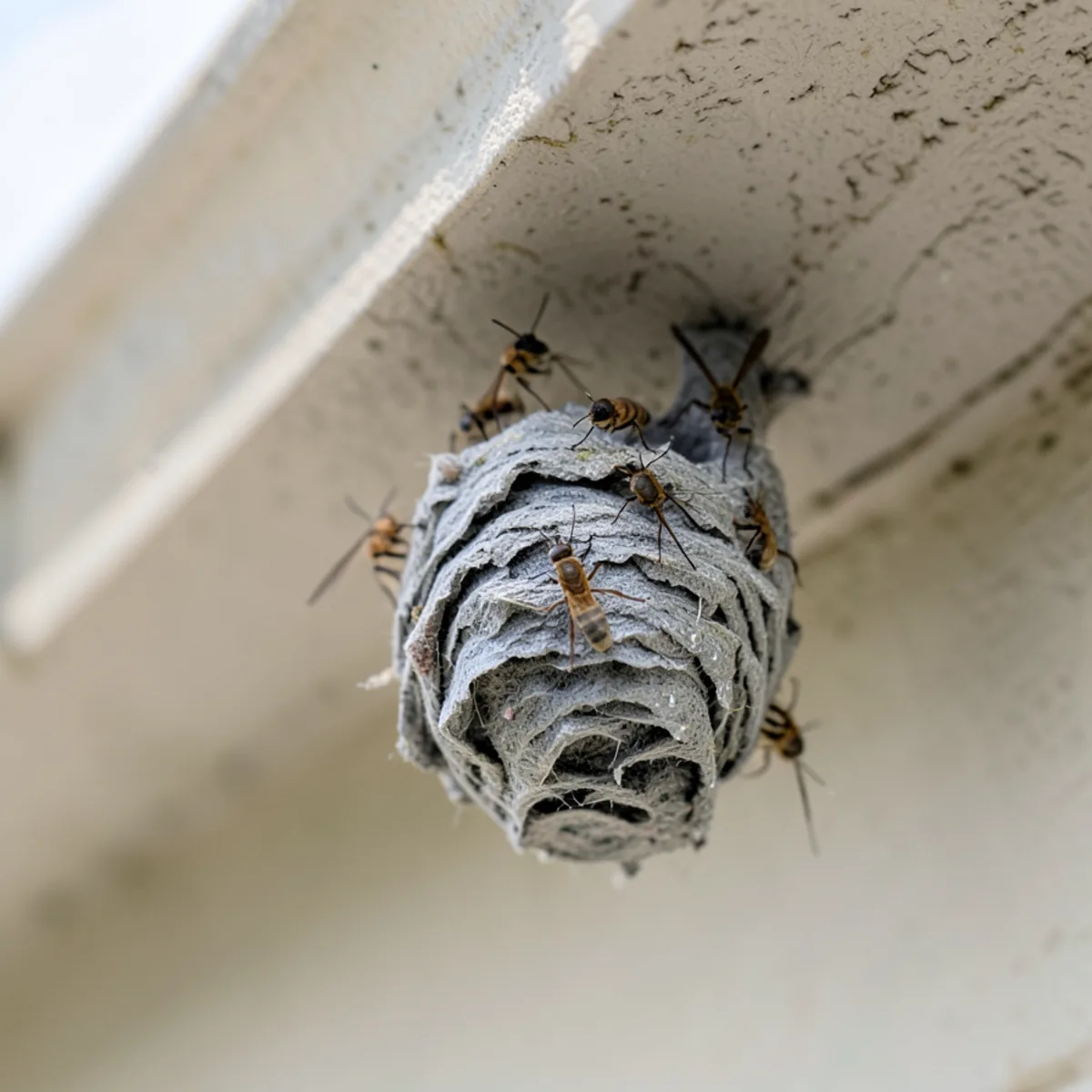
The shape and spot of a nest tell you what you are dealing with. A paper wasp nest is the open, umbrella-shaped comb of grey cells hanging under an eave, railing or porch ceiling, with the wasps visible on its face. A mud dauber builds slender tubes of dried mud against a wall and tends to keep to itself.
Hornets build a large, enclosed papery envelope — think of a grey football wrapped around a branch or eave — while yellow jackets often give nothing away above ground, revealing themselves only as a steady stream of insects slipping into a gap, a wall void or a hole in the lawn. Which one it is decides how carefully it must be approached.
Where wasps build near a doorway
Entrances attract wasps because the architecture gives them exactly what they want — an overhang that shelters the nest from rain and sun, plus quiet corners few people touch. Around a Florida front door, the recurring spots are predictable:
- Under the porch ceiling and in the eave corners
- Inside and above the door frame and trim
- Behind shutters and under window ledges
- Inside a light fixture or an unused mailbox
- Under railings, steps and the lip of the threshold
- In the gaps of a soffit or a wall vent
How a nest grows across the season
A nest by the door rarely appears overnight; it tracks the season. In spring a single overwintered queen starts a small comb of just a few cells, which is the easiest and least defended stage. Through the warm months she raises workers, and the colony and its nest swell steadily.
By late summer and early fall a paper-wasp or yellow-jacket colony can number in the hundreds, and that is also when it is most protective of the nest and quickest to react. A nest you shrugged off in May is a very different proposition in September, which is why the timing of the call matters as much as the location.
Why late-season nests are riskiest
Two things make an end-of-summer nest the dangerous one. The colony is at peak population, so a disturbance can bring far more defenders at once, and the workers are competing hard for dwindling food, which leaves them short-tempered and more likely to sting with little provocation.
Set that beside a front door everyone has to use, and the odds of an accidental bump against the nest climb through the fall. This is the season when a nest that merely needed watching becomes one that genuinely blocks safe use of the entrance until it is professionally handled.
The mud dauber exception
Not every nest by the door warrants the same alarm. Mud daubers are solitary wasps that build those small mud tubes and are famously non-aggressive, rarely stinging even when disturbed; many homeowners share a doorway with one all summer without incident. They also hunt spiders, so they do a little quiet good.
The catch is that an abandoned mud-dauber tube can later be taken over by other stinging insects, and the tubes are easy to confuse with the early stage of a more defensive nest. If you are unsure which you are looking at, that uncertainty itself is a fair reason to have it identified rather than guessed.
Keeping nests from coming back
Once an entrance has hosted one nest, the same sheltered spot invites the next. The lasting discouragement is to make those corners less usable: clearing old, vacated nests in the cool months when activity has stopped, filling gaps in soffits, trim and vents, and treating the underside of eaves and ledges where queens like to start.
Reducing what draws them helps too — keeping outdoor trash covered, cleaning up fallen fruit and sweet spills, and not leaving sugary drinks on the porch in late summer. None of this removes a live nest, but it changes the entrance from a prime building site into one wasps are more likely to pass over.
After the nest is gone
Removing the nest is the main event, but a couple of things follow. A nest site can hold a scent and structural cue that draws scouting wasps back, so clearing the residue and sealing the spot helps keep it from being reused. Wasps returning to a removed nest for a day or two is normal and settles as they disperse.
It is also worth checking nearby for a second nest, since a doorway that suited one colony often suits another a few feet away. A short inspection of the whole entrance — eaves, fixtures, vents and railings — confirms nothing else is getting started before you call it resolved.
Related on this site